
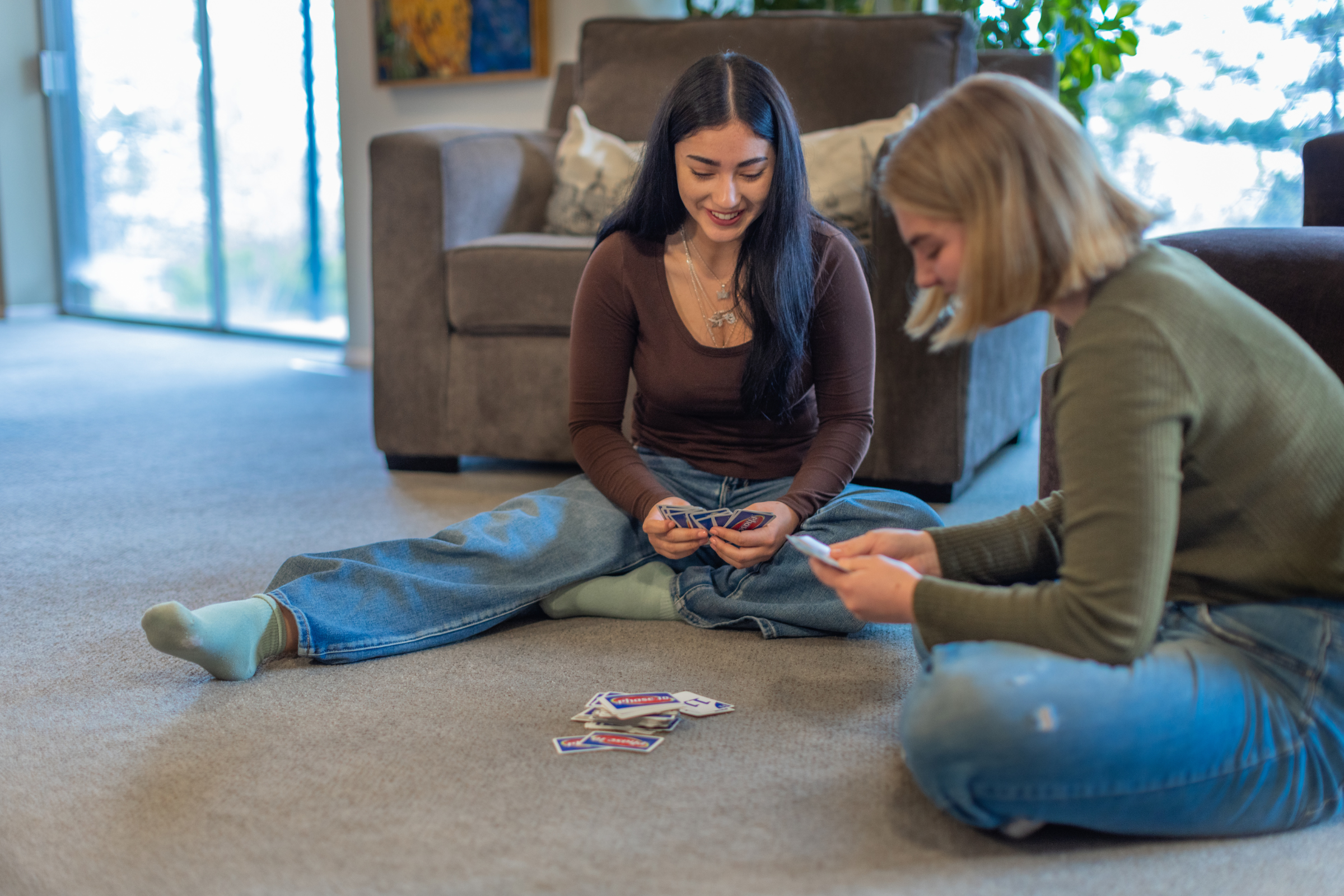
Belonging quiets survival mode. When the body isn’t bracing, the mind can learn.
When safety shows up, skills follow
Feeling like you belong isn’t a “nice to have.” For adolescents, a dependable sense of connection lowers the “threat level” in the nervous system so the brain can pay attention, remember, and try hard things. When teens trust the people and rhythms around them, they take more healthy risks like raising a hand, practicing a coping tool, and repairing a relationship after a hard moment. In this way, belonging is more than a feeling. It becomes the runway that lets new skills lift off.
Why belonging comes first
Learning sticks in calm, predictable contexts. In caring environments for teens, adults consistently model prosocial skills (like calm communication, problem-solving, and self-advocacy), then invite low-pressure practice and give clear, encouraging feedback. Over time, repetition in a safe setting builds both confidence and competence.
A few anchors that reliably support belonging
Predictable routines. Morning and evening rhythms, shared mealtimes, and check-ins create psychological safety.
Warm accountability. Expectations are clear, corrections are calm, and progress is noticed out loud.
Voice and choice where appropriate. Teens are offered age-appropriate input in their day, which grows ownership.
Strengths-forward moments. Creativity, movement, and academics become places to uncover ability—not just measure it.
Teaching-Family ideas, in plain language
The Teaching-Family Model centers on everyday coaching, clear positive feedback, and many short chances to practice. Adults show the skill, teens try it in low-pressure moments, and feedback arrives right away. With that steady rhythm, habits travel with a teen from classroom to studio to home because the cues stay consistent. Steady repetition beats intensity, and small reps grow confident patterns.
Connection → confidence → skills that stick
Belonging is what makes practice possible. A teen who feels safe enough to try will also feel safe enough to try again. That second attempt is where mastery starts. Here’s how the loop works
Connection reduces threat. Safety signals (names, eye contact, calm tone, predictable schedules) downshift the stress response.
Confidence grows. Teens experience small wins—finishing a task, using a coping skill, clarifying a boundary—and see themselves as capable.
Skills generalize. With guided practice and encouraging feedback, abilities show up in more places, even during stress.
Example: After a tough peer interaction, an adult models a short debrief (“What happened, what did you feel, what do you need now?”). The teen practices the same steps later that evening, then again the next day with a different situation. Each repetition is brief, supported, and specific. Over time, the skill becomes automatic.
Small signals with outsized impact
Micro-moments send powerful belonging cues. Here are a few.
Names and noticing. Calling a teen by name and naming a recent effort (“I noticed you stayed with the assignment even when it got hard”) strengthens identity and motivation.
Transitions with care. A two-minute preview before activity changes reduces startle and resistance.
Shared meals. Eating together is more than food; it’s rhythm, culture, and eye contact that tell the nervous system, “You’re safe here.”
Repair rituals. After conflict, brief, predictable repair steps help restore trust—and model how to fix things at home and school.
Did you know?
One study with first-year college students tested a one-hour “social-belonging” exercise. Years later, GPAs were higher, the achievement gap between Black and white students was about half as large, and three times as many students were in the top quarter of their class. The exercise helped students see everyday setbacks as common and temporary.
Small ways families can invite belonging at home
Belonging starts where you are. Families often find these simple practices helpful:
Five-minute evening reset. One round of “High, Low, Hope” (one good thing, one hard thing, one hope for tomorrow).
Predictable check-ins. A short morning plan (“Here’s the day, here’s what could be tricky, here’s a tool to try”).
Gentle debrief after hard moments. Keep it brief, curious, and specific; end by naming one next step.
Celebrate progress, not perfection. Mark small wins: a sticky note, a bead on a bracelet, a line in a journal.
Bringing it together
When teens feel they belong, they can breathe. When they can breathe, they can practice. With practice and steady encouragement, skills become part of who they are. Belonging comes first, not because connection is sentimental, but because it is structural. It’s the ground skill-building grows from.
References
Harvard Center on the Developing Child — Supportive relationships & resilience
Walton & Cohen (2011), Science — Social-belonging intervention (DOI)
Editorial note: This article is educational in nature and avoids claims about specific program structures or outcomes.