
Making Space for Your Voice: Creativity, Identity, and Healing
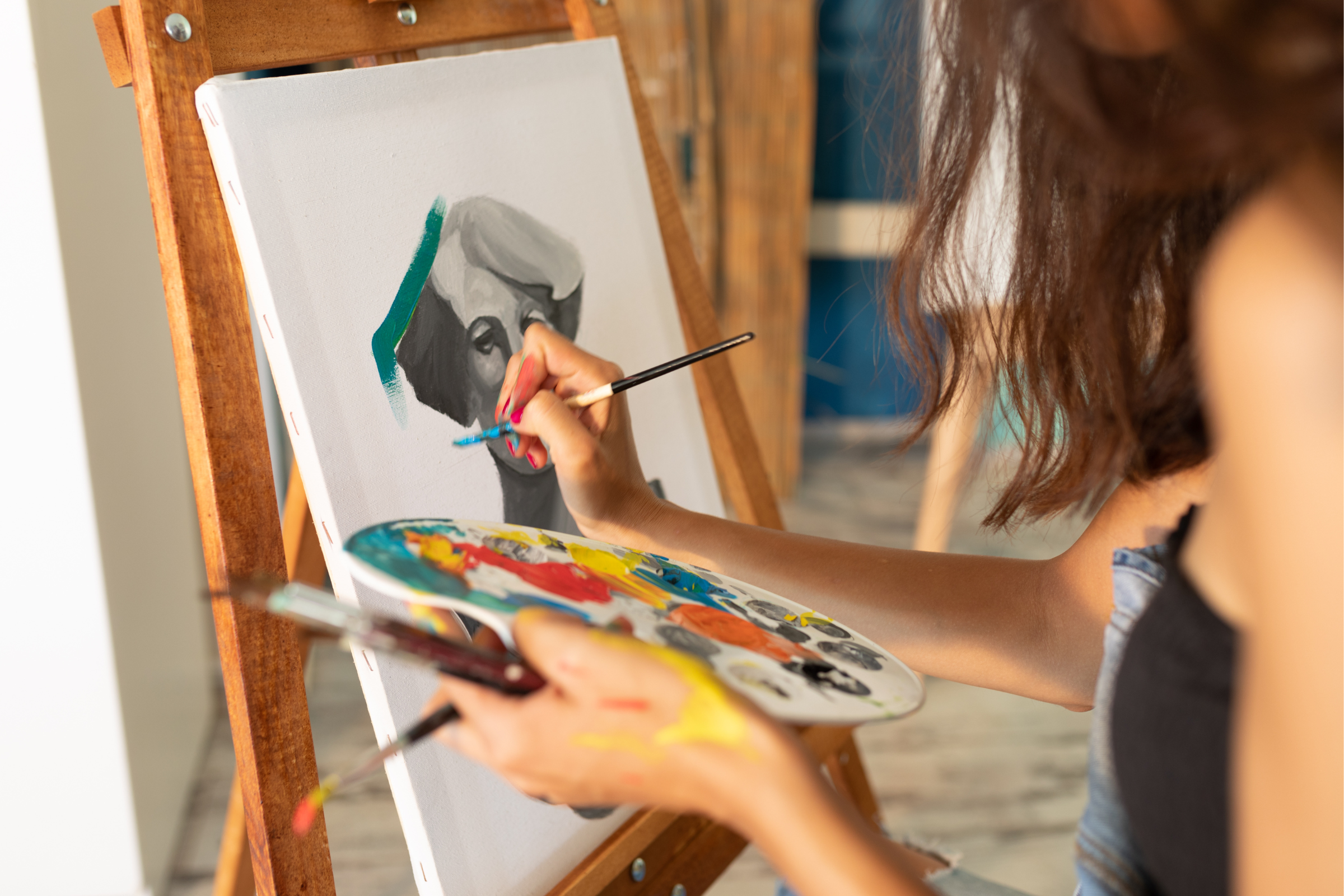
Somewhere along the way, a lot of people learned to treat creativity like a membership card. Either you “have it,” or you stay on the sidelines and admire the people who do.
Life tends to tell a kinder story. Creativity shows up anytime someone makes meaning. It can live in paint, movement, music, photos, a garden bed, a journal margin, a meal made with care. For many people, creative expression and identity end up intertwined, because making something becomes a way to hear yourself more clearly.
There is something quietly brave about that. A person creates, recognizes a piece of themselves, and starts to trust what rises from the inside. What if your voice starts on the page long before it shows up in conversation?
Creativity as a voice, and a place to heal
Some emotions resist tidy language. Others come with a history that makes speaking feel exposed. In those moments, creativity can offer a different kind of voice.
Color can hold mood. Shape can hold tension. A melody can carry grief and soften it into something workable. A collage can reveal what a mind keeps circling, even before anyone has the words.
For teens and the adults who support them, having a low-pressure way to express what feels hard to say can be especially supportive. Adolescence brings rapid change, social pressure, and constant comparison. A teen may keep a lot inside simply to get through the day. Creative expression can lower the stakes while still offering a real outlet.
Healing often grows through a few experiences that creativity supports well:
Safety while feeling something. You get to approach emotion in a way that feels tolerable.
Choice while expressing something. You decide how close to get, what to reveal, and what stays private.
Agency while shaping something. Your hands, voice, or body transform raw feeling into form.
If you want a starting place that feels grounded, keep it plain. Choose one medium that feels accessible and make something that matches your current inner weather. Explanations can wait.
Afterward, let meaning arrive at its own pace. Ask yourself:
What part of me showed up here?
What surprised me?
If the inner critic starts grading the result: What would I make if relief mattered most?
Trauma, the nervous system, and expression without words
Trauma can scramble the relationship with language. A nervous system that stays on high alert focuses on protection first. In that state, explaining can feel like a mountain. Some people go blank. Others flood. Some swing between the two.
Creative work offers another route. Experience can move through sensation, image, sound, and shape. The result becomes something a person can look at, adjust, step back from, return to later. Even that small distance can support steadiness.
Creativity is not always about trying harder. In a recent neuroimaging study on “flow” during jazz improvisation, researchers found that high-flow moments were linked with reduced activity in parts of the brain involved in conscious control, suggesting that fluent creativity often comes with a genuine “letting go.”
For caring adults, leading with curiosity keeps things spacious. You might ask, “What part felt satisfying to make?” or “What did you notice while you worked?” Questions like these invite reflection while letting the creator decide what they want to share.
How Eva Carlston supports creativity and healing
Eva Carlston integrates creative expression into a broader therapeutic and academic environment, giving students structured support while they explore identity and build tools for daily life.
Students have access to studio space, guidance, and a range of mediums, so expression can take the form that fits them. One student may find their voice through photography. Another may discover it through ceramics, dance, or design. Over time, the arts can become a practical way to practice agency, self-respect, and self-trust in real moments.
Therapeutic support alongside that creative work helps students connect what happens in the studio with what happens in relationships, decisions, and everyday regulation. When those pieces reinforce each other, progress feels less like insight floating in the air and more like something a student can actually live.
“I found I could say things with color and shapes that I could not say any other way. Things I had no words for.” — Georgia O’Keeffe
More from our blog
A closer look at how art therapy can support trauma healing through safe, creative expression.
Ways art and movement can support self-discovery when words feel out of reach.
References
Rosen, D., Oh, Y., Chesebrough, C., Zhang, F. Z., & Kounios, J. (2024). Creative flow as optimized processing: Evidence from brain oscillations during jazz improvisations by expert and non-expert musicians. Neuropsychologia.
Drexel University (2024). Your Brain in the Zone: A neuroimaging study on creative flow (summary).
American Art Therapy Association. Art therapy overview and research resources.