
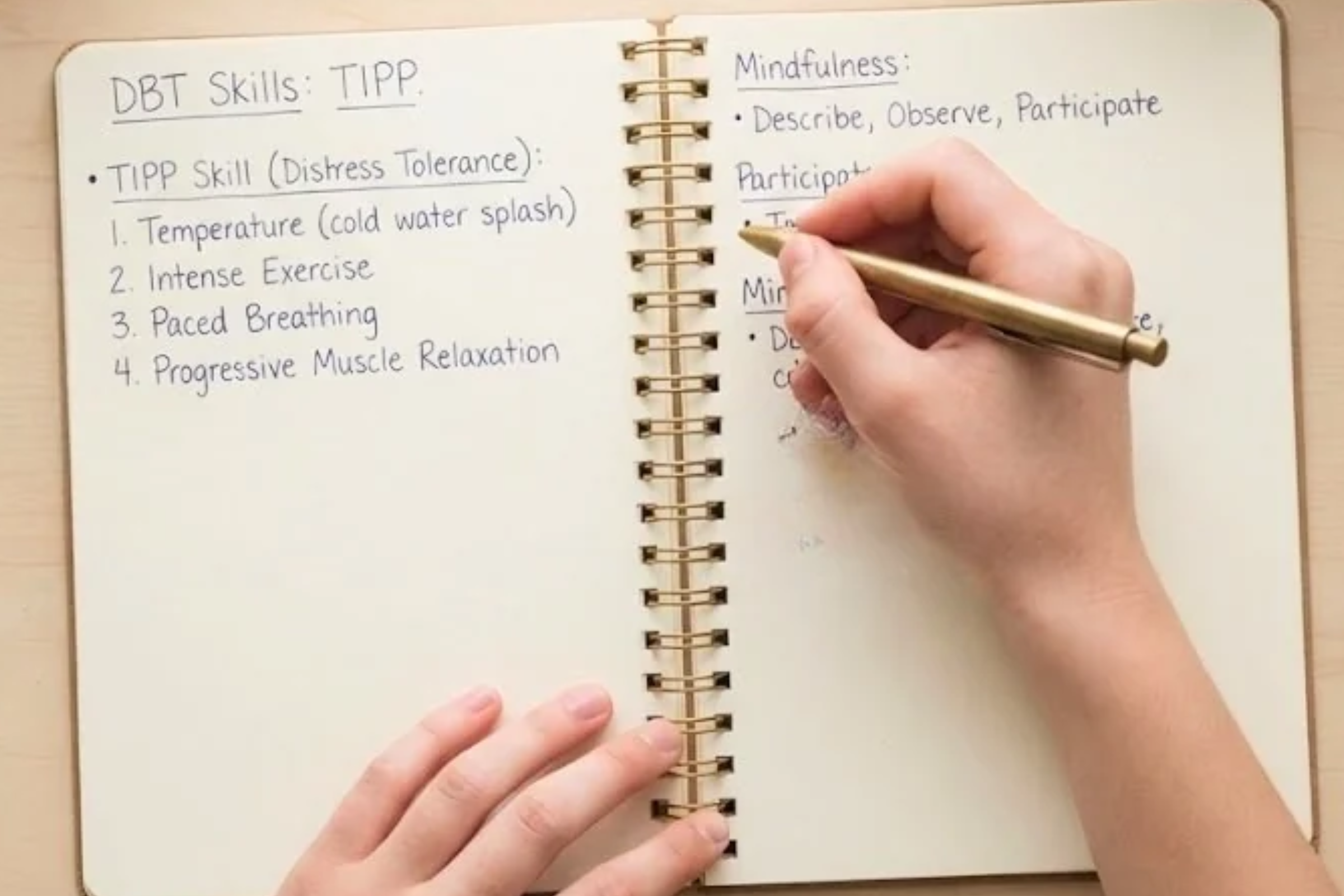
Teenagers face an intense blend of school expectations, shifting social circles, and personal pressures that can easily feel overwhelming. Dialectical Behavior Therapy (DBT) provides usable tools that break sudden distress into manageable choices. Beyond quick relief during stressful moments, these habits lay a groundwork for lifelong emotional strength and adaptability.
Core skills for navigating daily life
DBT organizes support into four distinct skill categories designed to help adolescents navigate tough feelings and situations.
Mindfulness helps teens stay grounded in the present without labeling thoughts as strictly good or bad. Practicing this catches runaway worries early, creating space to observe situations clearly before reacting.
Distress Tolerance provides immediate strategies to get through intense emotional spikes without making things worse. Techniques like temperature shifts or brief movement give the nervous system a chance to settle down during a crisis.
Emotion Regulation helps youth understand how emotions function so they can adjust their reactions over time. Teens learn to recognize subtle body cues, reframe negative thinking, and choose helpful habits during mood swings.
Interpersonal Effectiveness offers practical communication tools to express personal boundaries and ask for support directly. Asserting needs calmly allows adolescents to maintain self-respect while avoiding unnecessary conflict.
Practicing these tools regularly encourages adolescents to navigate immediate friction while building lasting resilience for whatever comes next.
Building emotional flexibility in everyday situations
Developing emotional awareness takes regular practice during routine moments, not simply when stress arrives. When unexpected changes occur at school or home, having an established framework keeps minor setbacks from snowballing into huge obstacles. Teenagers who practice noticing their reactions early tend to feel more in control of their daily choices.
This approach supports viewing emotional experiences as temporary states, not permanent truths. Recognizing that an intense mood will pass makes it easier to step back, reframe negative thoughts, and choose constructive actions. Over time, this habit of building a growth mindset creates a strong foundation for handling changing circumstances with confidence.
Trauma-informed care and nervous system support
Painful past events keep the mind on high alert, making ordinary interactions feel unpredictable at times. A trauma-informed application of DBT recognizes that intense emotional reactions frequently stem from protective survival patterns. Structured skill practice provides predictability, allowing young people to work through triggers at an unhurried pace.
Mindfulness in a trauma-focused setting prioritizes personal choice and comfort above rigid rules. Adolescents can practice staying grounded through simple, approachable observations without feeling pressured into intense self-reflection during stressful moments. Adapting these tools respects individual boundaries while giving teens practical ways to regain emotional balance on their own terms.
Practicing skills at Eva Carlston Academy
Living alongside supportive peers and mentors at Eva Carlston Academy provides continuous opportunities to put DBT strategies into practice. Whether sitting down for family-style dinners or working through shared decisions, students apply distress tolerance and clear communication during everyday routine.
These daily interactions work alongside structured therapy, including weekly individual sessions, family work, and specialized therapeutic groups centered on emotional balance. Creative programs offer expressive outlets alongside clinical care, where painting, music, and hands-on art give girls a practical channel to process feelings.
Moving forward with practical support
Learning to navigate emotions is an evolving process that unfolds through daily practice and patience. When teens have access to structured DBT skills, difficult moments become opportunities to build self-awareness rather than sources of panic. The right tools give them the foundation to navigate life with clarity, strength, and self-assurance.
More from our blog
References
National Institute of Mental Health. Child and Adolescent Mental Health. (2024).
American Psychological Association. Mindfulness and Dialectical Behavior Therapy in Youth. (2023).