
The Eva Way: Educate, Empower, Inspire
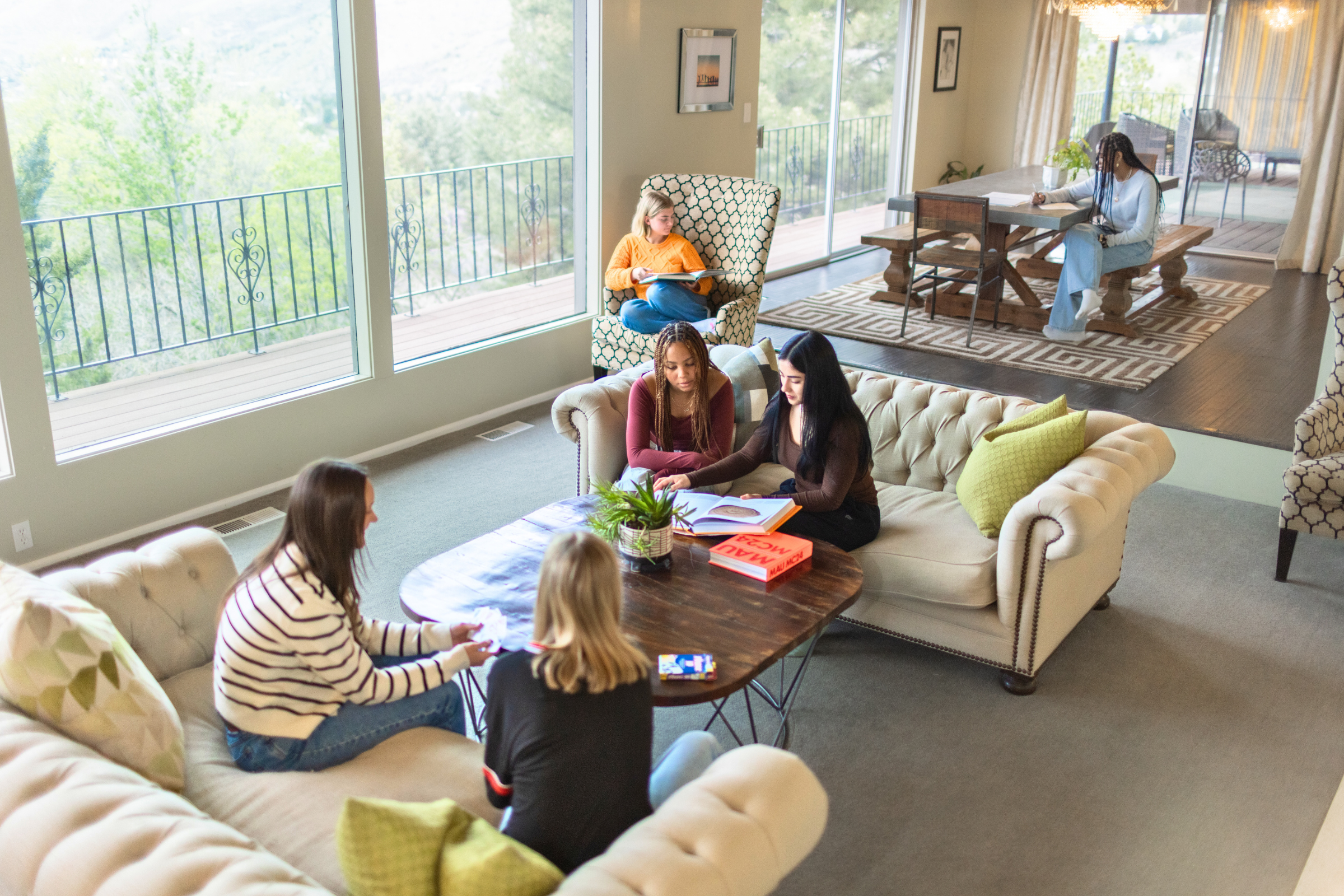
Eva Carlston is a residential program in Salt Lake City for adolescent girls ages 11–18. In small, home-like houses, our licensed clinicians, teachers, art therapists, and mentors align therapy, academics, creative practice, and daily routines so progress is practiced in the moments that make up a day. Students may be working through depression, anxiety, trauma, ADHD, learning differences, and other areas where a calm, consistent setting helps.
How care and daily life work together
Therapy is built into the rhythm of each day. Our. licensed clinicians provide individual, group, and family work, and mentors reinforce skills in real time. Care draws on evidence-based therapies, including EMDR, CBT, and DBT, and addresses trauma in a way that supports safety and trust. Families stay connected through weekly virtual family therapy, on-site sessions, and parent support groups.
Belonging is supported by a few reliable anchors: predictable routines, warm accountability, voice and choice where appropriate, and strengths-forward moments. These show up in house routines such as shared meals, chores, and collaborative decision-making.
Practice builds confidence
Studio classes, art therapy, and music give students structured ways to express themselves, offer and receive feedback, and try healthy risk. Academic art electives include critiques, and art therapy projects focus on themes such as family dynamics, boundaries, self-image, and personal stories. Students also meet the arts beyond campus through museum and gallery visits, performances, service projects, and community workshops.
Why the setting matters
Houses are intentionally small, generally 12–16 students, so relationships stay personal. Daily life blends structure with choice, including cooking, chores, check-ins, and age-appropriate community decisions. The Teaching-Family Model organizes practice around strengths-based skill building such as emotional awareness, problem solving, regulation, social skills, and independent living.
Academics that transfer
School stays steady with Cognia-accredited coursework, recognized diplomas, transferable credits, and licensed or certified teachers, with support for credit recovery when needed. Creative practice also builds for what comes next through digital and graduation portfolios, internships, and community exposure. These pieces help students prepare for their next chapter at home, at school, and in the community.
The team behind the work
Care is coordinated by a multidisciplinary staff of therapists and teachers, alongside trained mentors, so the same skills show up in therapy, in class, in the studio, and in home routines. The staff includes licensed clinicians (LCSW/CMHC), art therapists, certified teachers, and residential mentors trained in the Teaching-Family Model.
Accreditation and licensing
Eva Carlston maintains residential licensing through the Utah Department of Health and Human Services and lists accreditation by The Joint Commission. Academics are accredited by Cognia, which supports recognized credits and diploma pathways.
Closing
Together, a small home setting, licensed clinical care, recognized academics, creative practice, daily-living routines, service, time outdoors, and family partnership form a consistent framework. When these pieces line up, students can try a skill in a low-pressure moment and carry it forward to new places. If you’re exploring next steps with Eva Carlston, our admissions team can answer questions and share details.
More from our blog
A practical overview of trauma-aware education for families and classrooms.
For a closer look at academics that strengthen reasoning and voice, read about nurturing critical thinking.
How hands-on experiences build confidence and skills: learning by doing.